Flower Walk around Castle Hill on the 7th June 2026

Our precious Chalk Grassland

Flower Walk around Castle Hill on the 7th June 2026

After several days of squally weather, the day dawned dry, though windy and cloudy, as fifteen intrepid flower hunters set out to see what we could find on Castle Hill Nature Reserve just outside Brighton. We were privileged to be joined by Phil Belden, ‘Champion of the South Downs’, who happened to be just walking past “to see what he could find” https://sussexwildlifetrust.org.uk/news/meet-champion-of-the-south-downs-phil-belden.

We set off down the stony path from the car park to the reserve and were immediately detained by some Hedge Bedstraw, Common knapweed and Sainfoin. Richard, our expert botanist and another champion of chalk grassland, explained that Sainfoin was a legume (i.e. a member of the pea and bean family) and had historically been sown as part of crop rotations to fix nitrogen in the soil to improve its fertility. Indeed, over the fence we could see an arable field where plenty of Sainfoin was blooming as part of herbal ley. Continuing along the path we noted some Greater Knapweed and looked closely at some flowering Salad Burnet. Through a hand lens we looked at the tiny red anemone-like female flowers at the centre of its spherical head.

A little further on we walked down the hill towards the reserve proper. Most of us would have ignored the Buttercups as “just buttercups”, but Richard pulled one up (explaining that he only did this when a species was plentiful) to show us the bulbous root. Bulbous Buttercup enjoys drier locations than our other two common buttercups, including on chalk, and grows from bulbs, unlike the creeping buttercup most of us have in our gardens, which spreads with runners.

Nearer the valley bottom (still not yet on the reserve) we stopped to admire the Dropwort spreading up the hillside and had a detailed look at some Cut Leaved Cranesbill and an ant hill. These ant hills are built by yellow meadow ants. The particular conditions that they offer, including frequently replenished loose soil particles deposited by the ants excavating their tunnels and chambers, favour several chalk grassland plants like Wild Thyme. From here we had a good view of the reserve and Richard explained some of its history. Chalk Grassland is our most species rich type of grassland, with many plant species that don’t grow elsewhere. The grassland and its plants also supports a range of special invertebrates like the chalk hill and Adonis blue butterflies, whose larvae only eat one species of plant, horseshoe vetch, which is only found in chalk and limestone grassland. However, it’s estimated that about 70% of the chalk grassland has been lost in the last century and it now covers only 4% of the South Downs. Much was ploughed for conversion to arable or more ‘improved forms of grassland or lost through lack of management and succession to scrub or woodland. Richard pointed out some areas of encroaching scrub. Chalk grassland developed as part of a farmed landscape and grazing, mostly by sheep, is required to keep the scrub under control and prevent the loss of grassland.

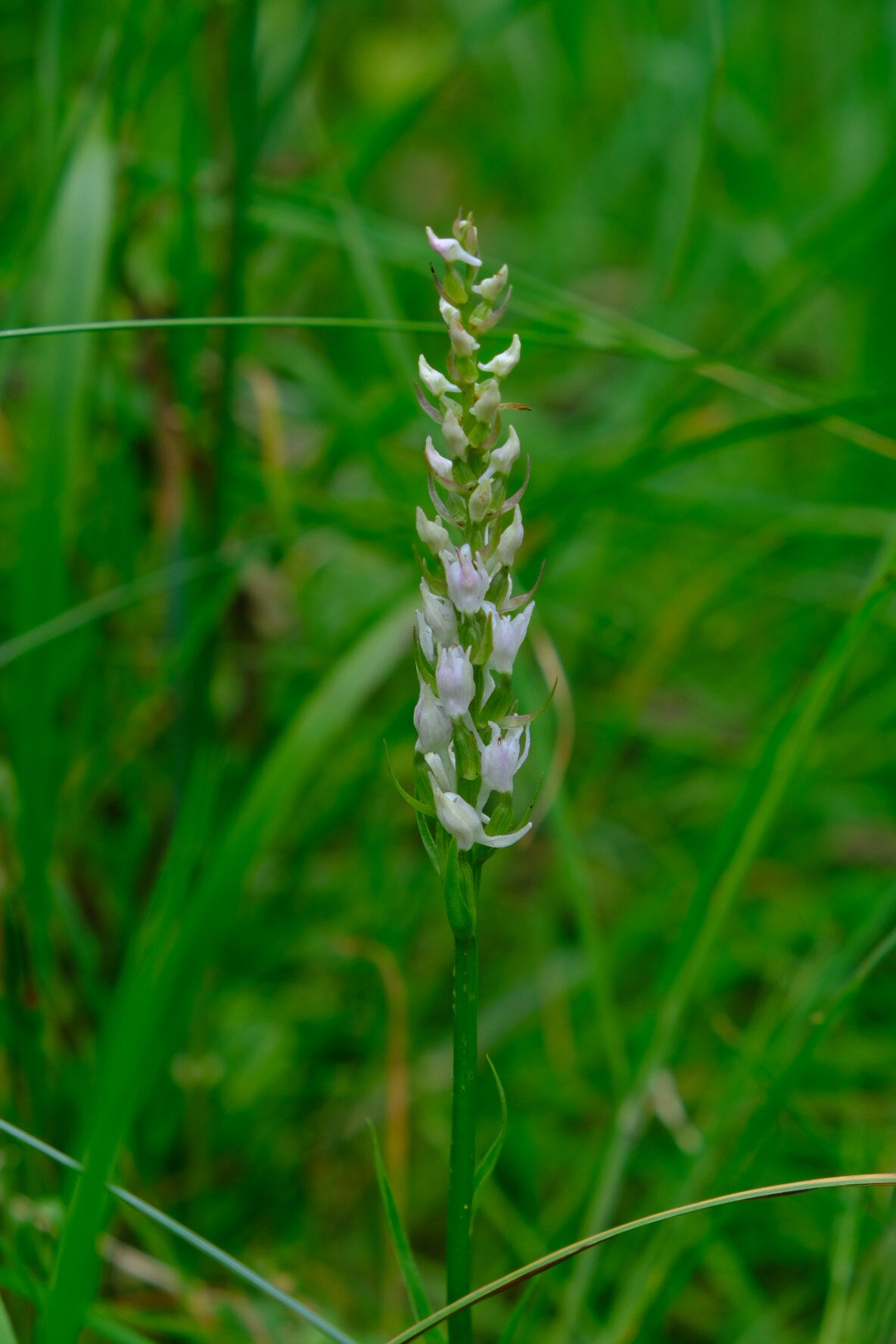
A short way further on we entered the reserve and passed through gorse scrub to a classic chalk grassland bank where we found a collection of true chalk grassland specialists including Chalk Fragrant Orchids, a few Common Spotted Orchids. Other species included Birds Foot Trefoil, Kidney Vetch, Fairy Flax, both Lady’s and Hedge Bedstraw, allthree colours (blue, pink and white) of Milkwort, Agrimony, Yellow Rattle, Rough Hawkbit, Restharrow, Small Scabious and Yellowwort.

Tearing ourselves away from the bank we walked past some Silverweed and clumps of Mignonette onto the side of Newmarket Hill. The species we had already seen were plentiful here and we also found some Horseshoe Vetch, which was scattered across the hillside. Sadly, the day was too windy for the blue butterflies to be flying, but Castle Hill is a renowned site for them. Not to forget the grasses we looked at some Quaking Grass, Upright Brome, Meadow Oat Grass, Crested Hair Grass and the low-lying Fescue, all typical in chalk grassland. We talked about the conflicts, in managing Tor Grass, a favourite of Wart Biter Bush Crickets, which perch on it in August, but which can smother the smaller plant species like Early Spider Orchids, another rarity for which Castle Hill is famous. Here Richard pointed out the difference between the abundant Rough Hawkbit and the less frequent lemon-coloured Mouse Eared Hawkweed.

Turning a corner, we decided it was time for some well-earned lunch. Although some of our party needed to head home the rest of us picked our way amongst the Chalk Fragrant Orchids to find a picnic spot. Looking over the valley which had earlier in the year been resplendent with cowslips, we discussed how different parts of the reserve has been subject to different management.

A treat was in store for the stalwarts, however. Turning down a path less travelled, Richard took us to see another speciality of the reserve, Nottingham Catchfly. This member of the campion family and a rare night-scented perennial is designated as Nationally Scarce. It was first discovered on the walls of Nottingham Castle where it is sadly now extinct and can only be found on a small number of sites in the Southeast of England. The flowers are vespertine, meaning they remain closed during the day and open at night to release a clove-like scent. Its sticky stems were once thought to trap flies, but it is actually pollinated by night-flying moths and bats, and it is an essential food for the larvae of the endangered White Spot moth.

Moving on, we started heading home passing the first budding Pyramidal Orchids that any of us had seen this year. Taking a path across the hillside, we were stopped in our tracks by a splendid Round Headed Rampion at its peak. Commonly known as the Pride of Sussex, the Round Headed Rampion is the county flower of Sussex and the reason the Rampion Wind Farm is so called.

Tired but happy, we made our windswept way back to the car park, full of facts and information about species we had seen during the day, which included at least 31 flowers and 7 grasses.

Flower walk June 2025 Ditchling Beacon to Wolstonbury Hill

A Journey through the Sussex Downs

Ditchling Beacon

It was windy but warm as eleven trepid flower hunters set out to see what we could find between Ditchling Beacon and Wolstonbury Hill. It took us a little time to leave the car park being detained by both Field and Devil’s Bit Scabious as well as Common Mallow and both Mouse-eared and Oxtongue Hawkweeds. When we managed to leave, we ambled around the meadow just south of the car park which immediately offered more chalk grassland indicators including Bird’s-Foot Trefoil, Agrimony, both Horseshoe and Kidney Vetch, Pyramidal Orchids, Common Spotted Orchids (which were slightly past their best at the end of June), Eyebright, Fairy Flax, Dropwort, Common Milkwort, Black Medick and Greater Knapweed as well as Wild Thyme and Wild Marjoram. There were plenty of less fussy wildflowers as well, including White Campion, Common Poppy, Common Restharrow, Yellow Rattle, Selfheal and Rosebay Willowherb.

We then looped back to the South Downs Way where we enjoyed the view and were joined by two more flower hunters. Sadly, the promised ice cream van was nowhere to be seen!

Meandering Through the South Downs

Our route now gently descended from Ditchling Beacon, across the top of the South Downs National Park with Skylarks serenading us as we went.

We found more Pyramidal Orchids along our way as well as some Common Spotted Orchids, which were still in their prime. We noticed a lot of Yellow Rattle as we descended gently down the path running parallel to the South Downs Way and wondered if this had been sown to parasitise the grass on an area that had been previously farmed. There was plenty of both Lady’s and Hedge Bedstraw as well as a splendid purple Geranium, which looked very much like a garden escape of the variety Rozanne, but a very long way away from the nearest garden!

We passed through a gate and across a grazed field until the appearance of Gorse indicated that we had come to a patch of acid grassland, caused by a sandstone cap, a rare habitat on the South Downs. As well as the Gorse and Brambles here, we found Sheep’s Sorrel and the delightful little Tormentil.

We rejoined the South Downs Way for a while before diving off for a short detour, going past Red and White Campion as well as a group of Duke of Edinburgh award students picnicking across the path! This little detour ran along a field margin left by the farmer and rewarded us not only with many of the species we had already seen but also Sainfoin, Oxeye Daisy and several different colours of Lucerne, showing what a great contribution to biodiversity a field margin of just a few metres can contribute.

We walked on alongside a golf course where another wild margin yielded Sweet Cicely, Red and Bladder Campion, Agrimony, and Ground Elder. After crossing a road, we walked through a wooded hedgerow coming out onto a path and our first star of the day, a Bee Orchid, in its absolute prime. Common Blue Butterflies flitted on the bank visiting the abundant Bird’s Foot Trefoil and Kidney Vetch. Although by now our tummies were telling us that it was past lunchtime, we lingered to look at more chalk downland species, including Common Restharrow and Yellow-Wort. We eventually reached our picnic spot on Wolstonbury Hill and settled carefully avoiding more Pyramidal Orchids and some Dyers Greenweed to enjoy the view and eat a well-deserved lunch.

Wolstonbury Hill

If you want to travel fast, travel by yourself, if you want to travel far go with others but if you want to travel neither far nor fast travel with a botanist! By the time we finished lunch on Wolstonbury Hill we were well into the afternoon, so we had to prioritise where on the hill to explore. Knowing that there were treats in store on the Orchid Bank we decided to head there, taking in some Chalk Fragrant Orchids on the hillside on the way. The Orchid Bank did not disappoint. Although there were only one or two Greater Butterfly Orchids still in full bloom there were still plenty of Twayblades plus the second stars of the afternoon, some Fly Orchids. By this time a number of us needed to head back. The less energetic of us headed for the nearest bus, but our fittest and healthiest (not to say younger) companions re-traced their steps to Ditchling Beacon taking in tea and cake on their way. A wonderful day… we all got home safely, tired and happy.

On the bus ©J.Vasylevska
©C.Sheriden
©S.Fry
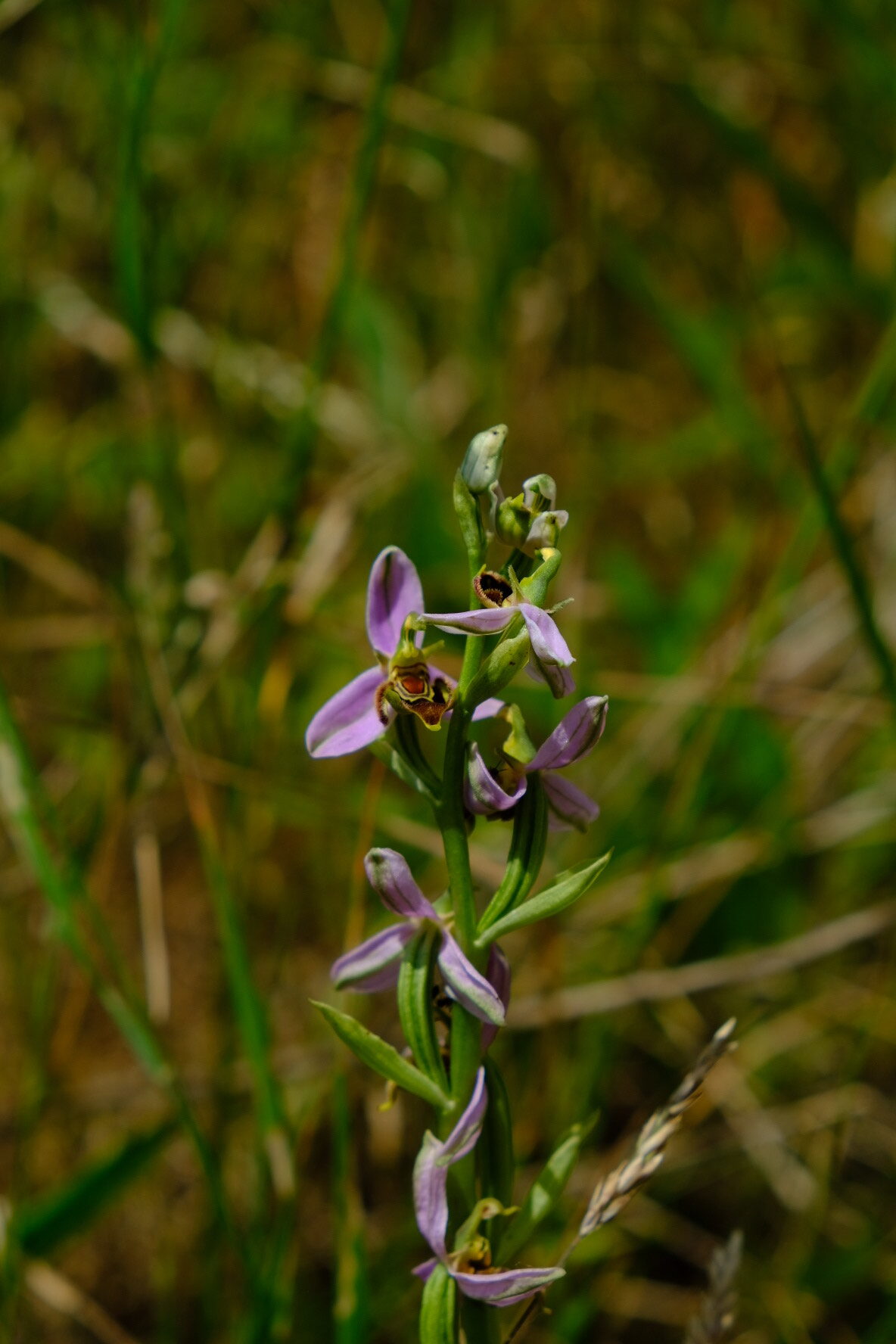
Bee Orchid
©S.Fry
©S.Fry
©S.Fry
©J.Vasylevska

BHWF rock pooling session with Gerald Legg

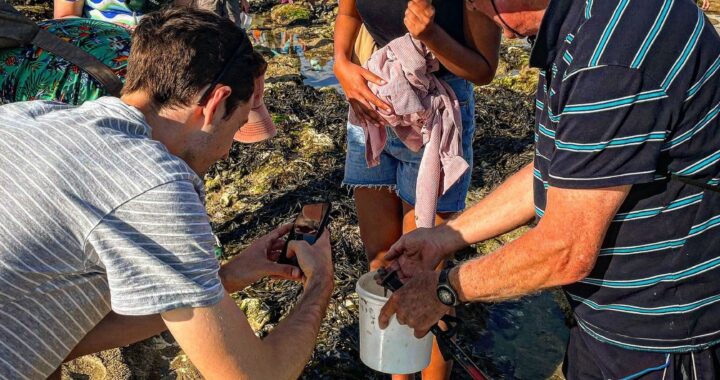
Thank you to everyone who came along to our guided BHWF rockpooling session with Gerald Legg, former keeper of Natural Sciences at the Booth museum and expert in all things shoreline.
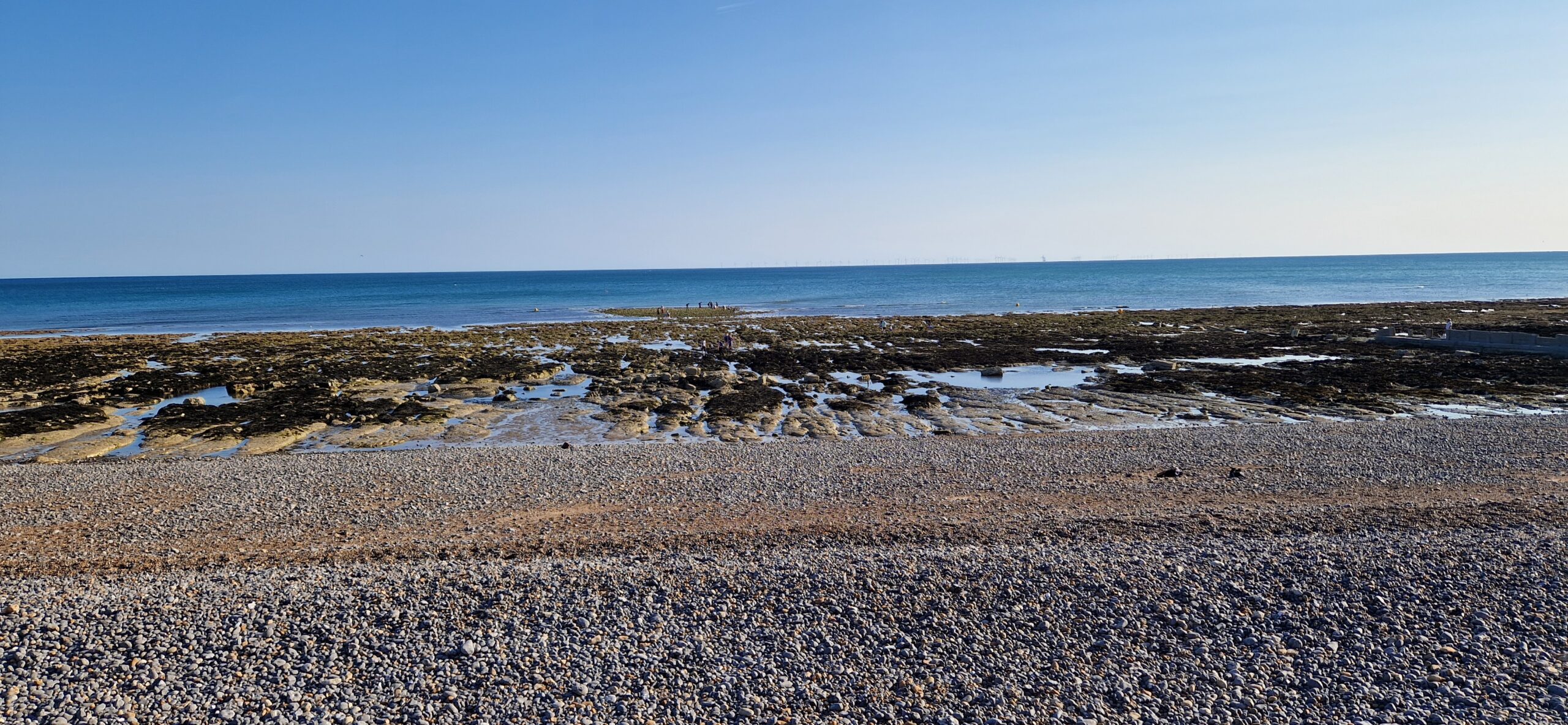
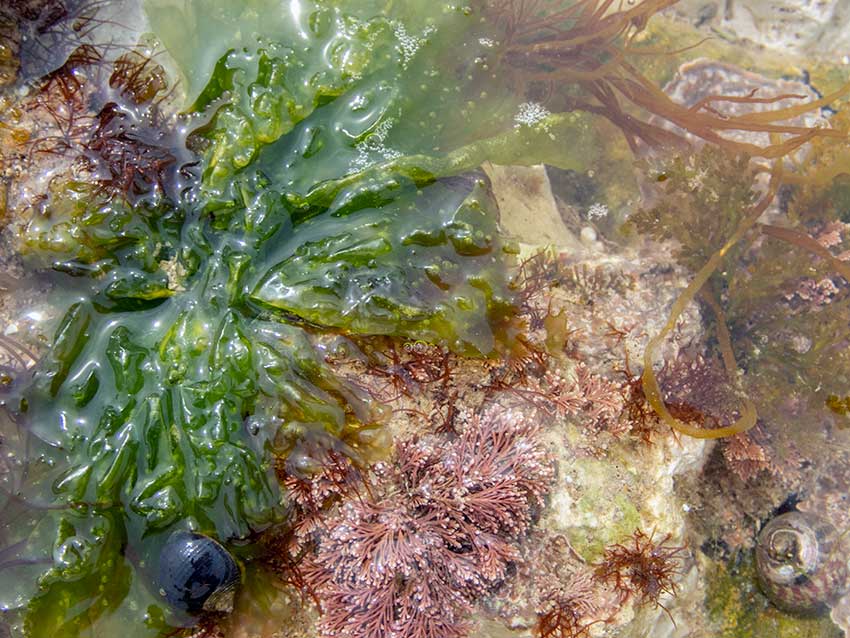
Lots of fascinating finds on what was a spectacular afternoon’s low tide for tipping rocks.
We are so lucky to have this otherworldly habitat on our doorstep. Why not head down to see what you can see? Remember to always put things back exactly as you found them.
Photo Credits- Ryan Greaves, Colin Leeves, Paolo Oprandi, Dee McCarthy
Common Blenny aka the Shanny (Lipophrys pholis)
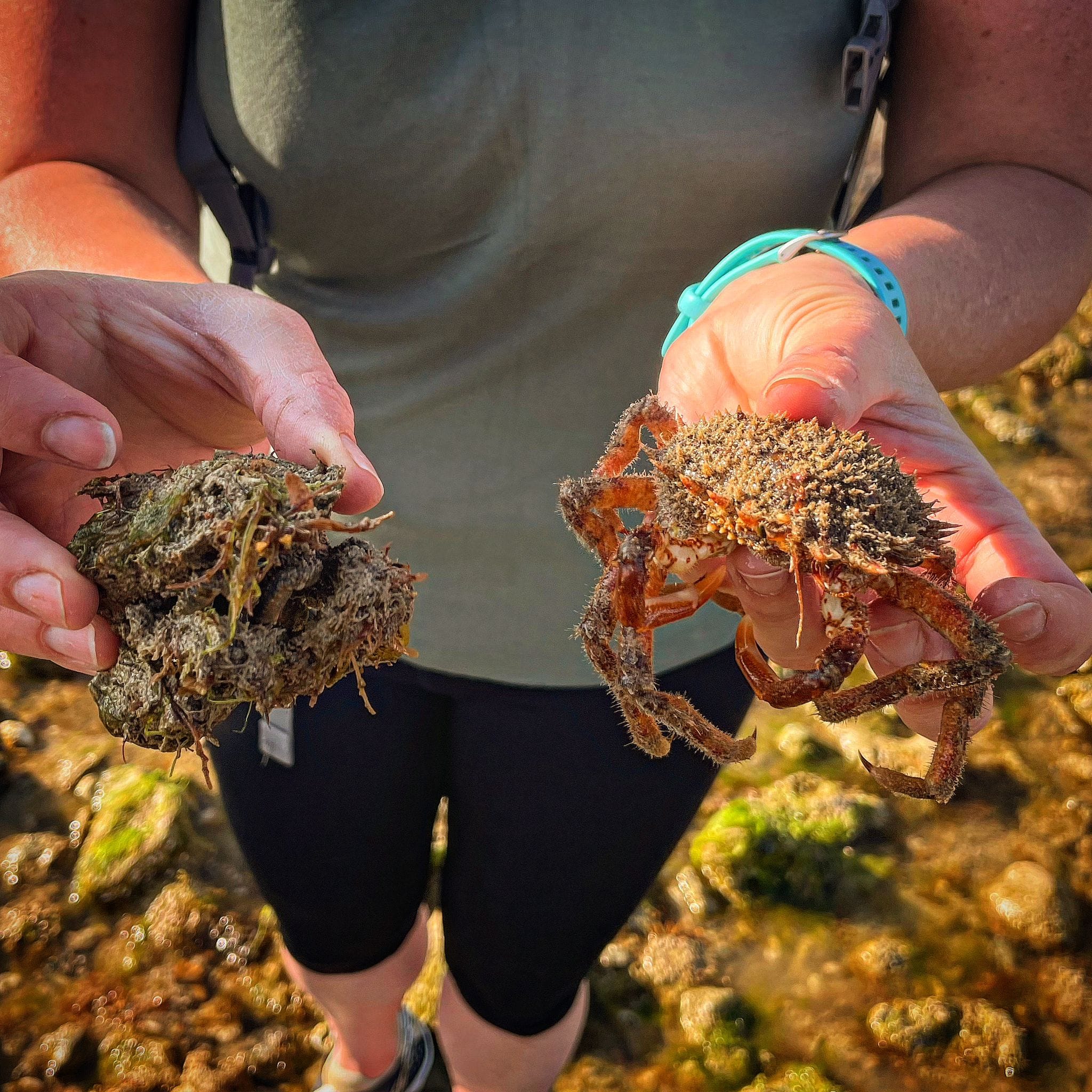
Hairy Crab
Snakelocks Anemone
Spider Crab exuviae (shed shells)
Boring Piddock
Broad Clawed Porcelain Crab
Fish Eggs
Chiton and Keel Worms
Green Sea Urchin

Brighton and the Eastern Downs tops the UK for the third year running in the City Nature Challenge 2023

Friday 28th April-Monday 1st May the Brighton and Eastern Downs region took part in the City Nature Challenge 2023, a global Bioblitz where cities and regions pit it out against one another to try to find as many different species as possible.

Benfield Wildlife and Conservation Group and the Wilding Waterhall project ran public bioblitz events with local experts and Buglife’s Alice Parfitt lending a hand with I’Ding some of the more specialist species found around our wonderful city.

Viviparous Lizard, seen at Waterhall Local Nature Reserve, photo credit Ryan Greaves

Professional ecological surveyor Graeme Lyons undertook a mammoth weekend of recording, chronicled here, in which he made 2801 records of 1014 species. This included 570 invertebrates, 303 plants and 77 birds. Gerald Legg, former Keeper of Natural Sciences at the Booth Museum also took a trip down to Black Rock for a survey of the rock pools and turned up a spectacular list. when the final scores were totted up the Brighton and Eastern Downs region came top in the UK, reclaiming the title it earned in 2021 and 2022!

It isn’t really a competition. The only winners are nature, science and everyone who takes part. The event is great fun and produces some top quality citizen science, helping us understand more about the wildlife we share our wonderful landscape with.

Nature’s intertidal treasures- naturalist Gerald Legg’s rock pooling session for the City Nature Challenge 2023

Gerald Legg, former Keeper of Natural Sciences at Booth Museum of Natural History for nearly 40 years, continues to contribute much to our understanding of the natural history of the Sussex coastline through his work with Sussex Wildlife Trust’s Sussex Shoresearch and Sussex Seasearch.
With the City Nature Challenge 2023 in full swing, Gerald took to Black Rock beach near Brighton Marina to survey the rock pools.
As his photos attest, there was much otherworldly beauty to be found…..
Leptoplana tremellaris– a species of marine flatworm
Coryne muscoides– a species of athecate hydroid
Lepidochitona cinerea– a species of chiton
Acanthochitona crinita– a species of chiton
Snakelocks Anemone Anemonia viridis

Barnacle spp

Green Shore Crab Carcinus maenas– male (left) mate guarding a female

Ceramium spp- a type of red marine algae

Slipper Limpet Crepidula fornicata

Cryptosula pallasiana- species of colonial bryozoan

Pulmularia setacea- species of hydroid

City Nature Challenge 2023- Fri 28th April- Mon 1st May

The City Nature Challenge 2023, an international bioblitz where cities and regions pit it out against one another in a friendly competition to see who can record as many species as possible, is next weekend- Fri 28th April- Monday 1st May.

Just download the i Naturalist app or go to the website and join the Brighton and Eastern Downs project to add your records and follow how the region is faring. Can we lead the UK for the highest number of different species recorded over the weekend for the third year running? I hope so!

Anyone can get involved and you can record anything you see from an Aardvark to a Zorilla. All taxa too from plants to fungi to lichen to animals.

Here are a couple of sites which are holding public bioblitzes you might like to join. Click on the links for details:

Saturday 29th April from 10am – 2pm at Benfield Hill Local Nature Reserve
Monday 1st May from 10am-3pm at Wilding Waterhall

Happy recording!

Wilder Verges project report- great success!

BHCC recently released a report on the Wilder Verges pilot study, which looked at whether managing our city’s road verges in a more targeted fashion could benefit people and wildlife. The results show how small changes in how we manage the landscape around us can have significant benefits to nature, even in a short timespan.

BHWF have been working in partnership with BHCC on the project since it began in 2021, with members offering expertise, advice and surveying. The forum looks forward to working with BHCC over the coming years to continue to refine the project and look for other suitable grassland areas to expand into.

“The Wilder Verges project helped to increase our diverse range of wildlife and plants. Its aim was also to bring residents and visitors closer to nature.

We monitored the Wilder Verges areas to learn how changes to how often and when we mow, affected our urban nature.

The results, detailed in our Wilder Verges Report show:

-nearly half (48%) of the sites saw an increase in pollinator or downland plant species present (11 out of the 23 sites)
-10 out of 23 sites (43%) saw the amount of pollinator species increase from 2021 (short mown) to 2022 (unmown during the main flowering season)
-70% of the verges (16 out of 23) recorded a pollinator or downland plant species not seen as present in the 2021 survey.”

Read the Wilder Verges project report summary.

Write to your local councillors in support of the project, highlighting the benefits to people and nature! Please cc in btnhovewildlife@gmail.com

Help Save Benfield Valley!

Benfield Valley is one of the remaining threads still connecting our city to the Downs, acting as a refuge for wildlife right in the heart of the urban landscape and a place for people to connect with nature on their doorstep.

The Benfield Valley Project has been working with Benfield Wildlife and Conservation Group to protect this area from development and inspire the community to care for the greenspace.

They are holding a protest on Sunday 16th October, 4:30pm in Greenlees car park, looking to push back at attempts to develop an area in the heart of the LWS. This would fracture the site and set a precedent for further development.

Please go and support, and spread the word to your communities. Similar efforts will be taking place at sites across the city and the more we support one another the louder our voice will be.

Also, please find below a lovely article on Benfield Local Nature Reserve which was printed in a recent edition of the Hovarian.

See below from Sally Hubbard, chair of Benfield Wildlife and Conservation Group

“Ahead of celebrating our 30th anniversary as a Local Nature Reserve next year, I am delighted our group is featured in this month’s issue of the Hovarian Magazine. This sets out the unique characteristics of Benfield Hill and its precious habitat. The article James and I wrote is a timely reminder of the need to protect and preserve Brighton & Hove’s first Local Nature Reserve. If you are interested in supporting our efforts, please do not hesitate to contact us. Thank you to @jamestulley and the Hovarian. Please see the link to the article.
https://www.brightonandhovemagazines.co.uk/the-hovarian/ #conservation #protection #nature #wildlife #community

Please note there is reference to a task day for volunteers on 23rd October but this is being postponed to 26th November.”